Meme 101
What is a meme, anyway?
A word a biologist made up in 1976 now names the internet's favourite kind of joke. How a picture and two lines of text became a language millions of people speak.

In 1976 the biologist Richard Dawkins needed a word for an idea that spreads from mind to mind the way a gene spreads from body to body - a tune, a catchphrase, a way of tying a knot. He took the Greek mimeme, “something imitated”, cut it down to rhyme with gene, and wrote meme into the last chapter of The Selfish Gene.
For thirty years the word lived mostly in books about evolution. Then the internet gave it a second life. By the late 2000s a meme meant something much more specific: a picture everybody recognises, with words on it that everybody knows how to read.
A joke with a recipe
What makes a meme different from any other funny picture is that it can be copied with changes. Success Kid isn't one joke - it's a recipe for a joke. The picture never changes: a toddler on a beach, fist full of sand, looking like he just won something. What changes is the text, and the text always follows the same pattern - a small, ordinary situation on top, an unexpected little win at the bottom.
Success Kid: Success Kid is a photo of a toddler on a beach, clenching a fistful of sand with a determined, triumphant face.
Once you know the recipe, you can read any Success Kid you've never seen before, and you can make your own in a few seconds. That's the whole trick. The picture does the setting-up; you only bring the punchline.
Why they spread
Dawkins' original idea still explains the rest. The memes that last are the ones that are easy to copy and easy to change: one picture, one clear attitude, a formula you can learn from a single example. Bad Luck Brian is always the kid things go wrong for. Philosoraptor always asks a question that sounds deep and isn't. The Most Interesting Man in the World never does anything, but when he does, he does it in style.
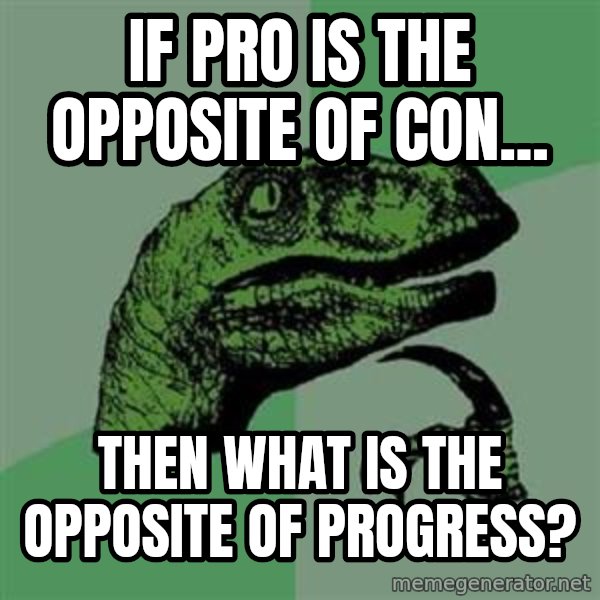
Each one is a character with a personality, and each new caption is a small story about that character. Some characters fade in a year; others, like Y U No and One Does Not Simply, have been captioned millions of times on this site alone.
Where to start
The best way to learn the language is to read it. Browse the classics, see what people wrote, and when one makes you laugh, press create and write your own. You don't need to draw, edit or own any software - the picture is already there, waiting for your top text.
More stories
- Top text, bottom text: the grammar of a meme - White capital letters with a black outline, one line above the picture, one below. Every part of the classic meme layout is doing a job.
- Advice animals: the colour-wheel years - A dog in front of a rainbow wheel started a whole family of characters, each with one personality and one job. How Advice Dog's descendants took over the internet around 2010.
- Rage comics: when the internet drew itself in MS Paint - Wobbly lines, a handful of faces and one big feeling per panel. The crude comics that gave us Trollface, Forever Alone and Y U No.
- Meme Celebrities: the people behind the faces - A yearbook photo, a stock photo shoot, a day at the beach. Nine ordinary people who woke up one morning to find their face had become a joke the whole world knew.
- From the big screen to the top text - A line from The Lord of the Rings, a smirk from 1971, a beer advert and a squinting cartoon. How film and TV became the internet's favourite raw material.
- Beyond two lines: panels, boxes and captions - Top and bottom text is only one way to caption a picture. The newer formats put words in boxes, beside panels or above the image - and you can make all of them here.
- How to make a meme that lands - Pick the right face, follow its formula, keep it short and be specific. Five rules from the millions of posts made on this site.